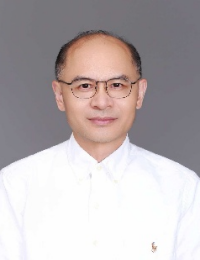
 | Prof. Luonan ChenShanghai Jiao Tong University Luonan Chen is a Chair Professor in School of Mathematical Sciences and School of AI, Shanghai Jiao Tong University. He was elected as the founding president of Computational Systems Biology Society of OR China, and Chair of Technical Committee of Systems Biology at IEEE SMC Society. In recent years, he published over 300 journal papers and four monographs (books) in the area of bioinformatics, nonlinear dynamics and AI with H-index 92, including “Nature, Cell, Nature Genetics, Nature Computational Science, Nature Ecology & Evolution, Nature Communications, Nature Cancers, Cancer Cell, Cell Metabolism, Cell Research, PNAS, NSR, TPAMI, JACS, PRL, CSC”. Speech Ttile: AI for Dynamical Systems Biology Abstract: The rapid development of high-throughput omics technologies has provided unprecedented big data support for life science research. Biomedical data from multiple sources, dimensions, and scales constitute typical multi-source heterogeneous big data, exhibiting significant spatiotemporal dynamic characteristics. In response to this feature, there is an urgent need to develop a system of dynamic theories and AI methods that can accurately characterize the spatiotemporal evolution rules of data, including tipping point detection and early warning prediction based on dynamic systems and AI, time series prediction based on the low-dimensional characteristics of attractors, causal inference based on embedding theory, and AI-enabled nonlinear multimodal data fusion based on deep learning. These new data science theories and AI methods centered on dynamics can not only help understand and predict the dynamic behaviors of complex systems and analyze their intrinsic processes and mechanisms but also provide a more physically interpretable modeling paradigm for artificial intelligence. Thus, they form a mutually promoting research paradigm of AI for Science (AI4Science) and Science-driven AI (Science4AI). The relevant theories and algorithms can be widely applied to key scenarios such as early warning of tumor invasion, metastasis and recurrence, real-time monitoring of public health, sub-health risk assessment, time series prediction, and trusted AI construction, which is of great significance for promoting the interdisciplinary integration of dynamics, systems science, data science, and artificial intelligence. |
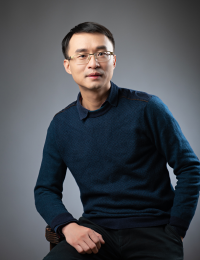 | Prof. Yu XueHuazhong University of Science and Technology Yu Xue is a Professor at the College of Life Science and Technology, Huazhong University of Science and Technology, Director of the Hubei Key Laboratory of Bioinformatics and Molecular Imaging, and a Researcher at Hongshan Laboratory. He currently serves as Secretary-General of the Artificial Intelligence Biology Division of the Biophysical Society of China and a member of the Council of the Chinese Society of Bioinformatics. His research focuses on bioinformatics of protein modifications. He has constructed the world's largest database of phosphorylation and lysine modifications, developed language models to predict the functions of modification sites, and elucidated novel regulatory mechanisms of dynamic modifications in key biological processes. In the past five years, he has published 30 papers (including co-authored) as corresponding author in international journals such as Nature Metabolism and Nature Biomedical Engineering, of which 24 papers have an impact factor greater than 10. His work has received 10,416 citations (excluding self-citations) over the past five years. He holds 17 authorized invention patents and 18 computer software copyright registrations. He has been recognized in the "Top 10 Advances in Bioinformatics in China" (2020, 2022) and has been named a Highly Cited Chinese Researcher by Elsevier (since 2020). He has completed projects as a Young Scholar of the "Chang Jiang Scholars Program" (2017) and as a Young Top-Talent of the "Ten Thousand Talents Program" (2014). He has been invited to serve on the editorial boards of international journals such as Briefings in Bioinformatics, Science Bulletin, and Scientific Data. He has delivered 21 invited presentations at international conferences, including the International Conference on Intelligent Biology and Medicine (ICIBM) and the International Conference on Genomics (ICG). In 2021, he was invited to contribute to the Nature spotlight article "A Dream of Data-Driven Healthcare in China," where he discussed the current state of multidisciplinary research integrating artificial intelligence with healthcare in China. Speech Ttile: Language models facilitate study of protein modifications Abstract: Protein chemical modifications are essential mechanisms that regulate biological processes. Their diversity, dynamic reversibility, and spatiotemporal specificity collectively form a complex cellular signaling network. However, the challenge between the vast amount of modification data and the lack of functional understanding lies at the core of this field. To address the "needle-in-a-haystack" prediction problem of functional sites, a series of artificial intelligence-based biology methods employing a "pre-training and fine-tuning" strategy have been developed. Among these, the tool GPS 6.0 has significantly enhanced the predictive coverage of kinase-specific phosphorylation sites. For novel modifications with extremely limited samples, such as β-hydroxybutyrylation, the pFunK language model was innovatively proposed, enabling effective prediction of new site functions using only a few known functional sites. This led to the successful identification of Aldob K108bhb, a key modification site regulating cancer metabolic reprogramming. To further systematically dissect the dynamic regulatory networks of modifications (addressing the "function of the needle" question), a multimodal hybrid model, LyMOI, was constructed. This model integrates the knowledge reasoning capability of large language models with the pattern recognition ability of deep learning. From over 1.3 TB of multi-omics data, it expanded the known knowledge of autophagy regulators by 9.7-fold and precisely identified CTSL and FAM98A as specific regulators of autophagy activated by the alcohol aversion drug disulfiram (DSF). Based on this mechanistic insight, a potential anticancer combination therapy of "DSF + CTSL inhibitor" was proposed, demonstrating a complete pathway from big data mining to precision medicine applications. This body of work shows that generative AI can "emerge" knowledge from data, not only driving a shift in biological research toward a new, interpretable, and predictable paradigm of "AI-driven biology," but also providing new avenues for a deeper understanding of life processes and disease treatment. |
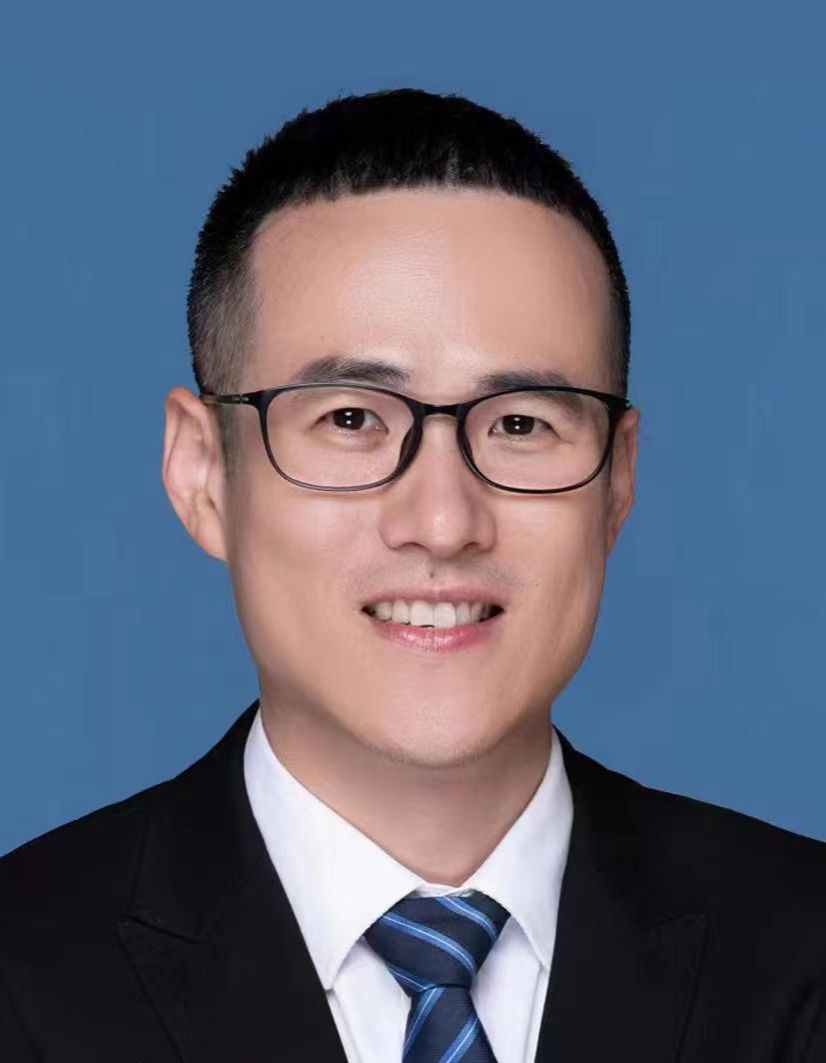 | Prof. Huiling ChenWenzhou University Huiling Chen, PhD, Professor and PhD Supervisor, serves as Dean of the Institute of Big Data and Information Technology and Dean of the School of Computer Science and Artificial Intelligence at Wenzhou University. She has presided over more than 10 research projects including national, provincial and ministerial level projects as well as major science and technology special projects of Wenzhou City, and has developed and delivered multiple sets of intelligent auxiliary diagnosis systems for practical application. She has been selected for a number of prestigious talent programs, including the National Young Talents Program, the Young Top-notch Talents of the "Ten Thousand Talents Program" of Zhejiang Province, the second batch of training objects (high-level top-notch talents) of the "Zhejiang Provincial University Leading Talents Training Program", the "551 Talent Project" of Wenzhou City, and the Oujiang Distinguished Professor of Wenzhou University. She has been listed in the Global Academic Influence Ranking of Scholars 2022/2023, the Highly Cited Chinese Researchers 2020/2021, the Top 200 Scientists in China's Computer Field recognized by Guide2Research, and has been consecutively included in the World's Top 2% Scientists ranking from 2021 to 2023. In recent years, she has published more than 100 academic papers as the first or corresponding author in important international journals in the field of artificial intelligence such as IEEE Transactions on Circuits and Systems for Video Technology, IEEE Transactions on Industrial Informatics and Artificial Intelligence in Medicine, among which more than 10 papers are listed as ESI Highly Cited Papers and 5 as ESI Hot Papers. She currently has an H-index of 96 with over 30,000 total citations of her papers, and 2 of her papers have been selected into the list of "China's 100 Most Influential International Academic Papers". |
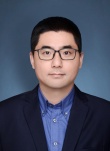 | Prof. Xiangtao LiJilin University Li Xiangtao is a Professor at the School of Artificial Intelligence, Jilin University, a recipient of a national-level young talent award, and was selected as one of MIT Technology Review’s “Innovators in Intelligent Computing in China.” He has been listed among the world’s top 2% scientists for five consecutive years. He has served as principal investigator for a major special project funded by the Ministry of Science and Technology of China, as well as projects supported by the National Natural Science Foundation of China, including both General Program and Young Scientists Fund grants. In recent years, he has published more than 150 papers in leading journals and conferences, including PNAS, Nature Mental Health, Nature Communications (5 papers), Advanced Science (9 papers), Nucleic Acids Research (3 papers), Genome Medicine (1 paper), Bioinformatics, PLoS Computational Biology, IEEE Transactions on Cybernetics, and AAAI. His research interests include AI4Science, single-cell and spatial transcriptomics data analysis, and dynamic prediction of proteins and RNA. Speech Ttile: Multi-omics Data Analysis and Interpretation Abstract: In recent years, the rapid development of single-cell multi-omics and spatial omics technologies has created unprecedented opportunities for dissecting tissue development, disease progression, and microenvironmental heterogeneity. However, these data are typically characterized by high dimensionality, sparsity, strong heterogeneity, and substantial cross-modality differences. How to accurately identify the key biological drivers from such complex data and further characterize critical cellular states within tissues remains a central challenge in computational biology. In this talk, we first address the problem that information from different modalities in single-cell multi-omics data is highly entangled, making it difficult to disentangle shared mechanisms from modality-specific mechanisms. To tackle this, we propose an orthogonal disentanglement framework for systematically characterizing shared drivers and modality-specific drivers across omics modalities, thereby providing deeper insights into the key regulatory mechanisms underlying tissue development and disease progression. We then turn to the spatial omics setting, where rare pathogenic cell populations are often difficult to identify robustly and interpret biologically. To address this challenge, we introduce GARDEN, a method designed to robustly characterize and interpret rare disease-associated cell populations within complex tissue microenvironments. This approach provides a new computational tool for discovering critical pathogenic cellular states involved in disease initiation and progression. |
 | Prof. Yiping LiuHunan University Yiping Liu, Professor and PhD supervisor at Hunan University. He is the Principal Investigator of a Young Scientists Fund (Category B) project from the NSFC. His research interests include computational intelligence, AI4Science, multi-objective optimization, and AI-driven drug discovery. He has published over 70 papers in leading international journals and conferences, including CCF-A venues, IEEE Transactions, and top-tier journals. He has led four national-level research projects, including NSFC grants, as well as two provincial-level projects such as the Hunan Provincial Excellent Young Scientists Fund. His honors include the Excellent Doctoral Dissertation Award of Jiangsu Province, the Second Prize of the Natural Science Award from the Chinese Association of Automation, the First Prize of the Science and Technology Award from the Jiangsu Association of Automation, and the Best Paper Award at GECCO. He has also been recognized among the World’s Top 2% Scientists by Stanford University. Speech Ttile: Molecular Intelligence for Drug Discovery Abstract: Artificial intelligence is transforming drug discovery from a traditionally experience-driven paradigm to a molecular intelligence paradigm jointly driven by data, models, and physical priors, with substantial potential to shorten development cycles and reduce costs. Despite these advances, several critical challenges remain, including insufficient molecular representations, the complex coupling of multiple factors during molecular design, and limited synthetic accessibility of candidate molecules. This talk presents recent progress on molecular intelligence for drug discovery. Specifically, it introduces: (i) molecular representation and pretraining methods leveraging physical information such as electron density; (ii) multi-objective generative and optimization frameworks for molecular design; and (iii) AI-driven approaches for molecular synthesis. The effectiveness of these methods is demonstrated across diverse drug discovery tasks. Finally, a future vision of AI-driven automated molecular laboratories is outlined, together with a discussion on building closed-loop intelligent drug discovery systems. |